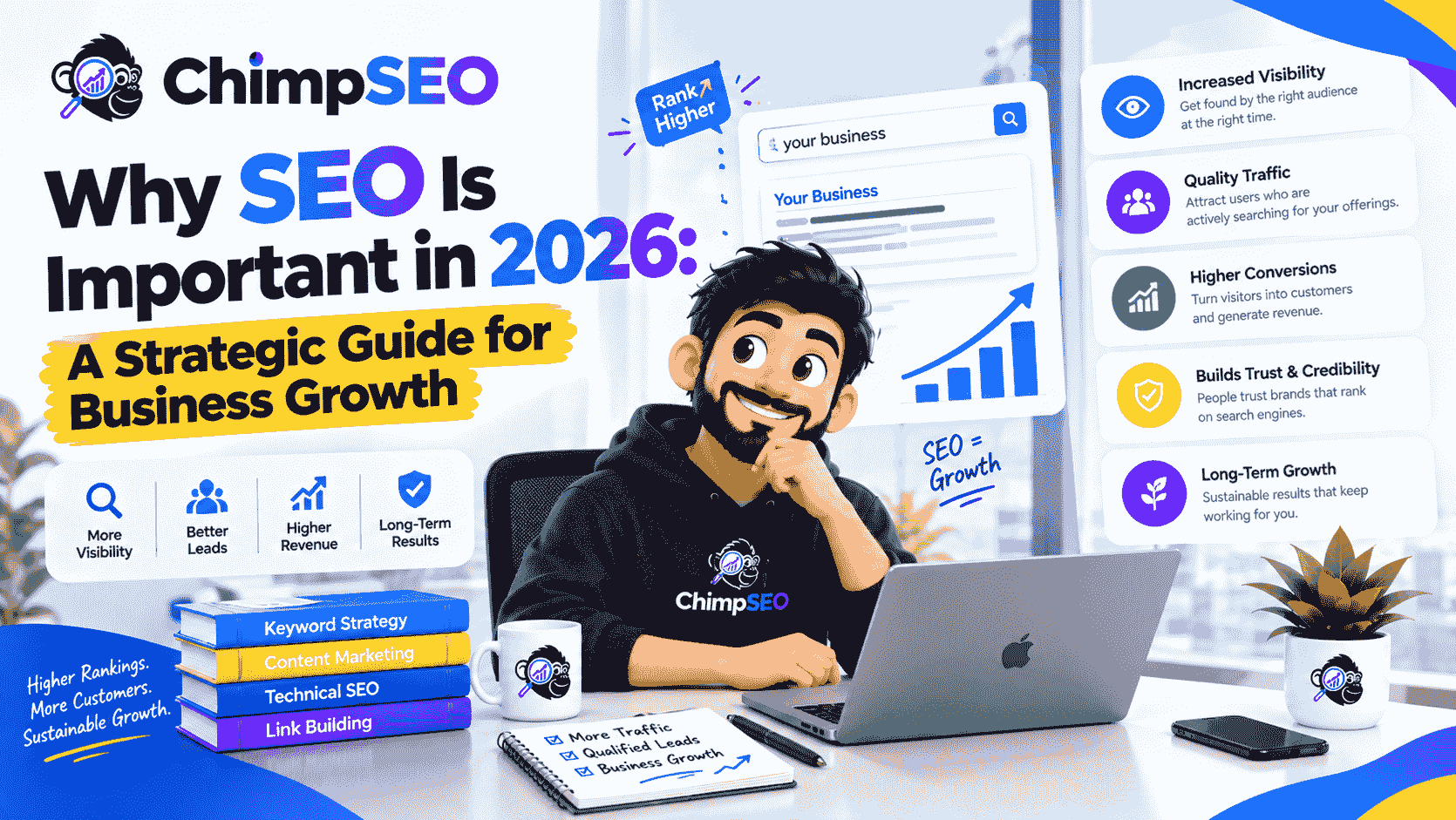
What Is SEO and How Does It Work?
Search engine optimization (SEO) is the systematic process of improving a website to increase its visibility in organic search results. Unlike paid advertising, which stops working the moment you cut the budget, SEO creates a compounding asset that attracts traffic, builds trust, and generates leads over time. At its core, SEO works by aligning your website's content and architecture with the way search engines like Google and AI-driven platforms interpret and rank information.
The Three Pillars: On-Page, Off-Page, and Technical SEO
- On-Page SEO: Focuses on the content itself. It involves optimizing keywords, meta tags, and internal linking to ensure search engines understand the relevance of your pages.
- Off-Page SEO: Centers on building authority. This is primarily achieved through high-quality backlinks that signal to search engines that your site is a trusted resource.
- Technical SEO: Ensures your site is crawlable and indexable. This includes site speed, mobile responsiveness, and clean code architecture.
How Search Engines Discover, Index, and Rank Content
Search engines use automated bots to crawl the web, indexing pages into a massive database. When a user performs a search, the engine retrieves the most relevant, authoritative results based on hundreds of ranking signals. Understanding how to rank a new website requires mastering this discovery process.
The Role of Search Intent and E-E-A-T
Modern SEO is driven by search intent—the "why" behind a user's query. Are they looking to buy, learn, or navigate? Simultaneously, Google prioritizes E-E-A-T (Experience, Expertise, Authoritativeness, and Trustworthiness). Content that demonstrates these qualities is far more likely to rank, regardless of how many keywords are stuffed into the text.
Why SEO Is Important for Modern Businesses
Driving Predictable, High-Quality Organic Traffic
Organic traffic is high-intent traffic. Users who find you through search are actively looking for solutions to problems your business solves, making them significantly more likely to convert than those reached through interruptive advertising.
Building Sustainable Brand Authority and Trust
Ranking on the first page of search results serves as a digital endorsement. Users naturally trust top-ranked sites more than those buried on page five. Over time, consistent visibility establishes your brand as an industry leader.
Lowering Customer Acquisition Costs (SEO vs. PPC)
While PPC provides immediate visibility, it carries a recurring cost per click. SEO requires an upfront investment, but the cost per acquisition typically drops significantly as your organic rankings stabilize, providing a better long-term ROI.
Capturing Buyers Across the Entire Sales Funnel
SEO allows you to target users at every stage of the journey. You can capture top-of-funnel awareness with educational content, mid-funnel consideration with comparison guides, and bottom-of-funnel intent with product pages.
Improving Overall Website User Experience (UX)
SEO and UX are deeply intertwined. Fast loading times, intuitive navigation, and mobile-friendly layouts are ranking factors that also happen to make your site easier to use, directly impacting your conversion rate.
The Value of Top SERP Positioning
The majority of clicks go to the top three results. If you are not visible in the top positions, you are essentially invisible to the vast majority of your target audience. Utilizing tools like Search Visibility Checkers can help you quantify exactly how much traffic you are missing out on due to lower rankings.
SEO in the Age of AI Search and Generative Answers
AI search engines and AI Overviews have not killed SEO; they have evolved it. These systems synthesize information from high-authority, crawlable web pages. By providing clear, structured, and accurate content, your site can become the primary source for AI-generated answers, effectively securing your position in the future of search.
Common SEO Mistakes That Stifle Growth
- Keyword Stuffing: Writing for bots instead of humans, which triggers search engine penalties.
- Neglecting Technical Performance: A slow or broken site will lose rankings regardless of how good the content is.
- Failing to Measure: Without tracking metrics like organic traffic and conversion rates, you cannot optimize your strategy effectively.
How to Measure the Real ROI of Your SEO Strategy
Measuring SEO success requires looking at both leading indicators (keyword rankings, impressions, and crawl depth) and lagging indicators (organic conversions, revenue, and customer acquisition costs). Expect a timeline of 6 to 12 months for significant traction, as SEO is a compounding investment.
Strategic Considerations: Global vs. Local SEO
For businesses operating beyond a single region, the SEO strategy must bifurcate based on target geography. Local SEO relies heavily on Google Business Profile optimization, local citations, and proximity-based ranking factors, aiming to capture 'near me' intent. Conversely, international SEO requires a sophisticated approach involving hreflang tags, localized content strategy, and domain structure decisions (e.g., ccTLDs vs. subdirectories) to ensure search engines serve the correct language and currency to the right user. Failing to align your technical architecture with your geographic target is a common pitfall that dilutes authority and confuses search crawlers.
The Intersection of UX, Core Web Vitals, and Conversion
Modern SEO is inseparable from User Experience (UX). Google’s Core Web Vitals—specifically Largest Contentful Paint (LCP), Interaction to Next Paint (INP), and Cumulative Layout Shift (CLS)—are not just technical metrics; they are proxies for user satisfaction. A site that loads instantly but shifts layout elements as a user tries to click a button creates frustration, leading to high bounce rates. By optimizing for these vitals, you satisfy search algorithms while simultaneously reducing friction in the conversion path. A mobile-first approach is no longer optional; with Google’s mobile-first indexing, your mobile site is the primary version used for evaluation. If your mobile UX is inferior to desktop, your rankings will suffer, regardless of your content quality.
Synergy Between SEO and Generative AI Overviews
AI search engines and Generative AI Overviews represent a shift from 'ten blue links' to 'summarized answers.' To succeed here, your content must be structured for machine readability. This involves using Schema markup (JSON-LD) to explicitly define entities, prices, ratings, and FAQs. When you provide structured data, you make it easier for AI models to ingest your content as a verified source. The strategy shifts from 'ranking for a keyword' to 'being the entity that answers the query.' This requires a focus on 'Answer Engine Optimization' (AEO), where you prioritize concise, factual, and high-authority snippets that AI models can cite as a primary source, effectively positioning your brand as the expert behind the AI's response.
A Framework for Measuring Organic ROI
Measuring SEO ROI requires moving beyond vanity metrics like keyword rankings. A robust framework tracks the 'Organic Contribution to Pipeline.' This involves calculating the value of organic sessions by multiplying the organic conversion rate by the average customer lifetime value (LTV). To forecast growth, use a 'Search Volume vs. Potential Traffic' model: estimate the total addressable search volume for your target keywords, apply a conservative click-through rate (CTR) based on your current SERP position, and model the revenue impact of moving from position 10 to position 3. This provides stakeholders with a clear, data-backed expectation of the financial upside of SEO investments.
SEO Implementation Checklist for Growth
- Technical Audit: Ensure no crawl errors (404s), implement robots.txt correctly, and verify XML sitemap submission in Search Console.
- Content Gap Analysis: Identify high-intent keywords your competitors rank for but you do not, and create 'better-than-the-best' content assets.
- Authority Building: Shift from link-building to 'link-earning' by creating original research, data visualizations, or proprietary tools that naturally attract backlinks.
- Conversion Rate Optimization (CRO): Regularly A/B test calls-to-action on high-traffic organic landing pages to maximize the value of existing visitors.
- Continuous Monitoring: Use Search Console to track 'queries with declining impressions' to identify and refresh decaying content before it loses significant rankings.
Frequently Asked Questions
How long does it take to see tangible results from SEO?
SEO is a medium- to long-term strategy. While technical fixes can yield quick wins, significant organic traction typically takes between 6 to 12 months to compound.
Is SEO still important with the rise of AI Overviews and chatbots?
Yes, it is more important than ever. AI answer engines rely on established, crawlable web pages that demonstrate authority and E-E-A-T to source their answers, making core SEO the foundation of AI visibility.
Can SEO replace paid advertising (PPC)?
SEO and PPC are complementary. SEO provides sustainable, non-click-fee traffic over time, while PPC offers instant reach. Running both maximizes your SERP real estate.
Why is SEO important for B2B companies specifically?
Over 90% of B2B buyers conduct extensive online research before contacting a vendor. An organic search presence is vital to capture these buyers during their complex, multi-touchpoint research phase.
What is the difference between on-page, off-page, and technical SEO?
On-page SEO covers content and keywords; off-page SEO involves building authority and backlinks; and technical SEO ensures your site is crawlable, fast, and mobile-friendly.